

INEOS Inovyn expands its sustainable PVC range
AN INEOS business, which made history when it started selling PVC made from wood pulp instead of purely fossil fuels, has made further strides. Inovyn has now introduced two more – equally sustainable – PVC products following the success of BIOVYNTM.
“The products of the future really are available today,” said Audrey Debande, Sustainability Business Development Manager, who is based in Belgium.
BIOVYNTM along with NEOVYNTM and RECOVYNTM are now being successfully marketed to customers who either want to cut greenhouse gas emissions or reduce plastic waste.
“We know our customers want and expect this,” said Audrey.
When Inovyn launched BIOVYNTM in 2019, it wasn’t sure how the market would react to a product that, although cuts CO2 emissions by more than 90%, was significantly more expensive than conventionally-produced PVC.
But the demand was there, and it meant Inovyn could continue to do what it does best: innovate.
“It really did set the scene for the development of our future sustainable products,” said Audrey.
Since its launch, BIOVYNTM has been used across a wide range of applications including cars, clothing, rugs and flooring, buildings and construction and in prosthetic limbs – and, long-term, it will be Inovyn’s net zero option.
To meet evolving customer needs, Inovyn has introduced NEOVYNTM, an innovative, less expensive product for customers who want to reduce their carbon footprint in the short term and offer themselves low carbon footprint products on their market.
NEOVYNTM brings a step change in carbon footprint with a reduction of 37% below the European industry average for suspension PVC.
“NEOVYNTM was more challenging because we needed to find the most economical way to reduce our carbon footprint without damaging our credibility standards,” said Audrey.
That meant investing in the use of renewable hydrogen and other forms of green energy during the production process – both key to helping Inovyn decarbonise.
Their third product is RECOVYNTM which is made purely from plastic waste that currently cannot be recycled anywhere else.
“It is designed for customers who want to increase their recycled content and meet high technical, quality and regulatory requirements,” said Arnaud Valenduc, Business Director of INEOS Inovyn.
And provided Inovyn can continue to access recycled plastic waste, which is effectively its new raw material, the company is confident it can continue to provide society with what it needs.
All three products have also been certified by the most stringent global requirements in the field, including RSB (Roundtable on Sustainable Biomaterials) and ISCC (International Sustainability & Carbon Certification) PLUS.
Geir Tuft, CEO of INEOS Inovyn, said sustainability was one of the most important and pressing challenges for modern society and Inovyn, as an influential, industry leader and world-class producer of PVC, had a vital role to play in helping develop new solutions and support the green transition.
“Our world is continuously evolving, and so are we,” he said. “And the target is clear. The UN has set our generation’s greatest challenge, to achieve carbon neutrality by 2050.”
Eco-power
ULTRA-LOW carbon chlor-alkali products are now being made available from Inovyn’s sites in Rafnes, Norway, and Antwerp, Belgium, using renewable power generated by water and wind. “This is a critical step in helping our customers reduce their carbon footprint and accelerate the transition towards a net zero economy,” said Arnaud Valenduc, Business Director of INEOS Inovyn.
Chlor-alkali chemicals are a critical raw material for the manufacture of everything from water purification and fertilizers to soaps, detergents and pharmaceuticals.
Inovyn’s standard chlor-alkali products, which are used to manufacture caustic soda, caustic potash, and chlorine, already offer 30% lower CO2 emissions than the European industry average.
The launch of its new range, which is certified under the International Sustainability & Carbon Certification PLUS scheme, cuts CO2 emissions by 70% for caustic soda.
The Norwegian site is using local hydroelectric power to run its production plant.
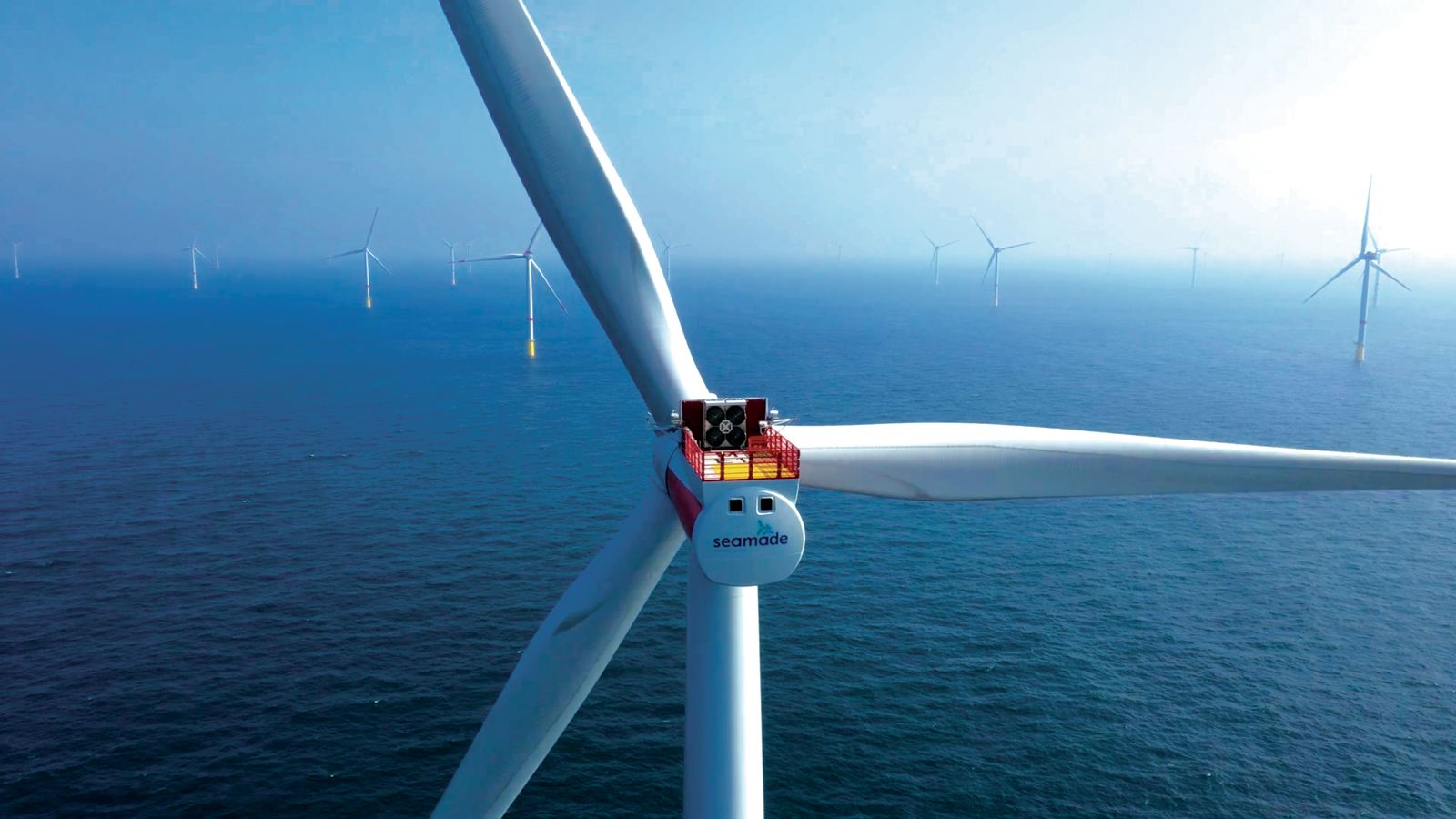
Wind turbines in the North Sea power the site in Belgium.
Project Circle
INEOS Inovyn is investing to ensure all PVC can be recycled. PVC is one of the most widely used plastics in the world which can be found in window frames, pipes, flooring, cables, sports gear and life-saving medical equipment.
It is also one of the most recycled polymers in Europe using mechanical recycling. Thanks to the VinylPlus® initiative, which has spanned the past 20 years, almost one third of European PVC waste was mechanically recycled in 2022, but reaching full circularity remains a complex challenge for the industry.
This is because when PVC is mixed with other plastics and substances, mechanical recycling has its limits.
INEOS Inovyn, though, is pioneering advanced new technologies to recycled complex waste so that the hard-to-recycle PVC can be turned back into its original raw material: which is the objective of project Circle.
“This is an ambitious venture,” said Paul Daniels, Operations Director. “But we are already making significant strides towards a more sustainable and truly circular plastics industry.”
Its Project Circle team are now exploring three possible advanced recycling technologies using dissolution, pyrolysis and gasification, which would also remove harmful legacy additives that have been used in the past, such as lead, cadmium and certain phthalates.
‘It is an ambitious venture, but we are already making significant strides towards a more sustainable and truly circular plastics industry.’
– Paul Daniels, Operations Director
But Inovyn cannot – and doesn’t want to – work in isolation.
“The entire supply chain must be integrated into the industrial setup,” said Paul. “That’s why we have been forming consortiums with customers, waste collectors and sorters.
“It will ensure a well-rounded approach to recycling PVC waste that allows for synergies with third parties and the widespread adoption of the technology for a sustainable PVC industry.”
Inovyn is taking an important step on this journey by commissioning two new pilot plants at their R&D centre in Jemeppe-sur-Sambre site in Belgium It is hoped the first industrial PVC waste recycling unit, capable of processing up to 40,000 tonnes of PVC waste each year, will be operational by 2030.
“This effort symbolises a paradigm shift in the PVC industry and a remarkable stride towards a more sustainable future,” said Paul.
Power of the sun
IT’S not just water and the wind that INEOS Inovyn will be relying on to power its plants. In July this year, the sun will be playing a vital role when 90,000 solar panels start generating renewable electricity exclusively to INEOS’ Jemeppe site, one of the largest PVC production plants in Europe.
“For the PVC industry to grow, it is critical we have support and access to competitive renewable energy,” said CEO Geir Tuft.
The solar farm is one of Belgum’s biggest, covering an area the size of 56 football pitches, and will be capable of generating 60MW of competitive, renewable electricity.
It will cut CO2 emissions by 14,000 tonnes every year.
Under an agreement with its partners Perpetum Energy and Green4Power, Inovyn will buy all the green electricity produced from Jemeppe-sur-Sambre over the next 15 years.
“We are proud to contribute to INEOS Inovyn's environmental objectives,” said Luc Leenknegt, CEO and founder of Perpetum Energy.
European plastics face a competitiveness gap with the US and China, due to high energy costs, less access to raw materials and a challenging regulatory landscape.
“Measures are needed to safeguard the competitiveness of our industry and avoid Europe becoming dependent on imports from abroad,” said Geir.
“Support schemes that provide access to renewable energy are critical to a sustainable future.”