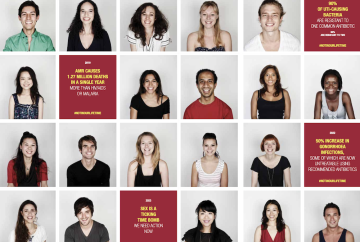
A CAMPAIGN, which opened young people’s eyes to the threat posed by antimicrobial resistance (AMR), has won an award. The Ineos Oxford Institute had highlighted how everyday life would otherwise be deadly without adequate use of antibiotics.
But, with the aim of delivering this message to young people, the institute used sex to show how a common sexually-transmitted infection could kill by 2040 if new antibiotics were not discovered.
The Not In Our Lifetime campaign not only worked – with understanding of AMR almost doubling among those aged 18 to 29 – but it was also recognised by the UK Health Security Agency.
“AMR is often seen as a distant or technical issue, but its consequences are immediate and personal,” said Avni Gupta, head of communications at the institute.
“Young people play a crucial role in tackling AMR as they are the future stewards of antibiotic use.”
Antimicrobial resistance already causes a million deaths a year and it’s getting worse. The overuse and misuse of antibiotics are to blame. So too is the lack of investment in new drugs to replace existing antibiotics that have lost their efficacy.
The world has not discovered a new class of antibiotics for almost 40 years. But without new antibiotics, giving birth, an infected wound, ear infections, routine surgery and sex could become life-threatening because bacteria have evolved to resist most of the existing antibiotics, making the drugs ineffective.
The institute’s Not In Our Lifetime campaign had focused on drug-resistant STIs – and warned gonorrhoea was at risk of becoming increasingly untreatable in the future due to the rapid rise of AMR.
The campaign highlighted that those aged 15 to 24 were most likely to contract the disease and that there had been a 50% increase in gonorrhoea infections in the UK since 2021. But it is not just common STIs that are already resistant to antibiotics. About 90% of bacteria that cause urinary tract infections are resistant to at least one common antibiotic, and 80% are resistant to two.