

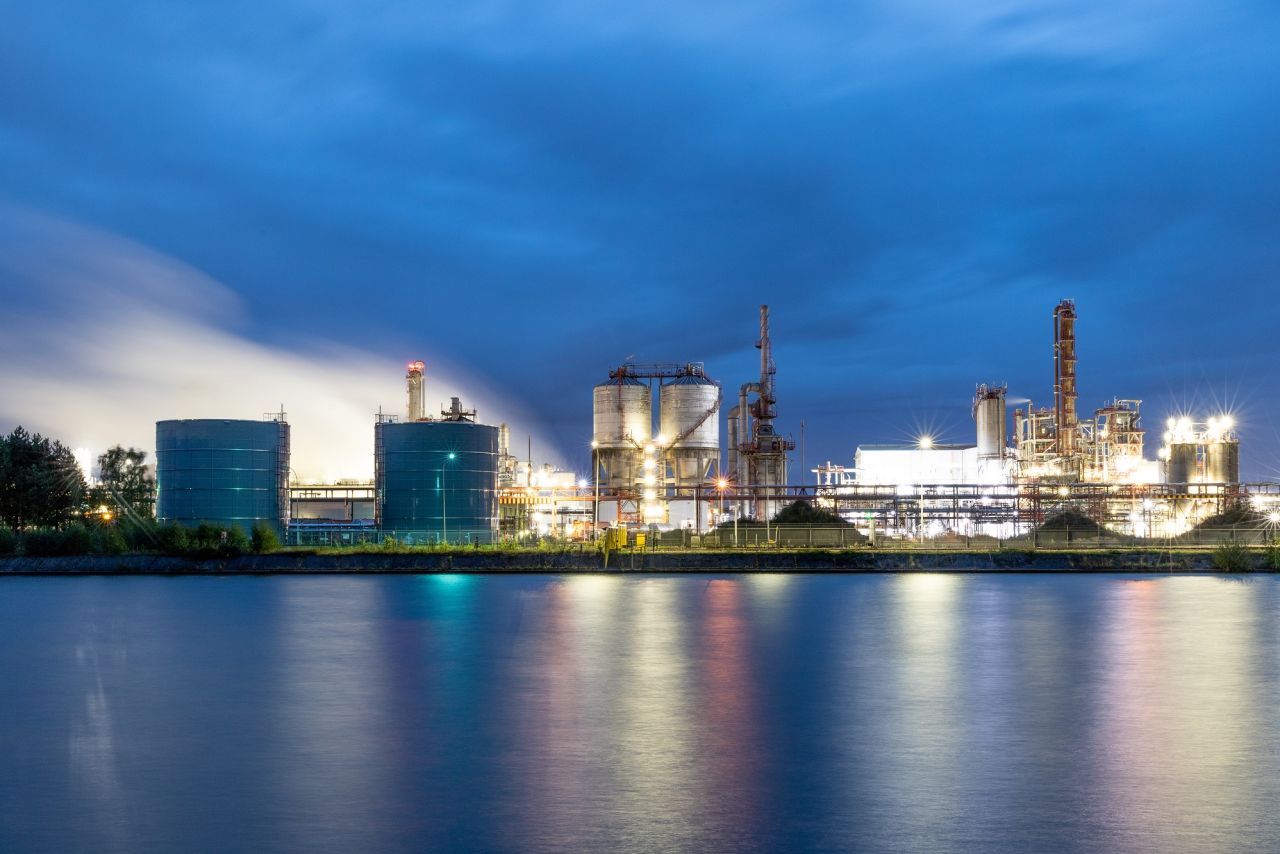
- INEOS O&P on the Amocolaan in Geel will shut down the production facilities from 8 to 24 October for annual maintenance work.
- Of course, we are doing everything we can to keep the nuisance for local residents and the environment to a minimum.
In order to be able to carry out maintenance safely, we will first make the propylene pipeline that comes from Antwerp gas-free. On 8 and 9 October 2025, a temporary flare installation will be installed between Amocolaan and the E313 motorway in order to burn the remaining propylene in the pipeline in a controlled manner. The fixed torch on the site will also be used during this period.
As a result, you can see large vertical flames at INEOS (formerly Amoco) on the Amocolaan on the Geel-Laakdal border. Light and noise nuisance is possible on site with the mobile and fixed flare. There will only be flaring on the mobile torch during the day.
From 12 to 18 October 2025, we will carry out the effective maintenance work on the pipeline and the production installations, including high-pressure spraying work to clean parts. The high-pressure spraying work will also take place at night in order to limit the nuisance in time.
Finally, from 21 to 24 October 2025, the production installations will be brought back to high pressure and cleaned with nitrogen. This may be accompanied by limited noise nuisance at the fixed flare on the company premises.
What is a mobile torch?
Torches are typical of the oil and chemical industry. The mobile torch on the Amocolaan is about ten meters high, with a flame of one and a half meters on top. A burning torch is a sign that the safety systems are working properly.
See also the 10 frequently asked questions about torches below.
Are flares harmful to humans and the environment?
The combustion of hydrocarbons, such as propylene, gives a clean combustion, a bright flame and no harmful substances in the atmosphere. The residual products are water vapor and carbon dioxide (CO2) and these are the substances that we as humans exhale.
What disruption can we expect?
Of course, we are doing everything we can to keep the nuisance for local residents and the environment to a minimum. With the temporary installation with the mobile flare, minimal nuisance to local residents is expected.
- Light - Burning gas residues creates a flame that can be up to one and a half meters high, on top of the 10-meter-high torch. This flame can be visible, especially in the dark.
- Noise – Because the gas is burned in a controlled manner, we expect little noise pollution.
- Heat - Combustion is regulated in such a way that heat radiation to the environment is limited.
- Smoke – We do not expect smoke to form.
How long does the flaring with the mobile torch take?
This depends on the amount of propylene in the pipeline and the pressure at which it is burned in the flare. It is estimated that this will take about two days. The flaring of the mobile torch will only take place during the day. The fixed torch will be used on 8-9 October and 21-24 October.
Do you live near INEOS O&P, INEOS Aromatics or JBF in Geel and are you experiencing nuisance from our activities? Then you can call the Green Phone at any time on 014 482 812.
TEN QUESTIONS ABOUT TORCHES
- What is a torch? A flare is a safety instrument that removes a sudden excess of gas or impurities from the process and burns in an environmentally friendly way.
- So what is a flare? Flare is the English word for torch and means exactly the same thing. The jargon of the chemical industry is very much influenced by English. This is due to the many American companies that built factories in Flanders, especially in the 1960s.
- What is a torch not? A torch is not a chimney from which
smoke escapes. Nor is a torch an incinerator that is used to burn waste. The less the torch is activated, the better. After all, they are usable raw materials that are burned. - How does a torch work? In a chemical factory you often find flammable gases such as hydrocarbons. They are put under pressure in all kinds of barrels. If that pressure becomes too high, for whatever reason, it must be able to go. That is why those barrels are equipped with a safety valve. This is a valve that opens when the pressure in the vessel rises above a certain value. These safety valves are connected to the flare via pipes. In the torch, the flammable gases mix with oxygen. Contact with the pilot, a kind of pilot light at the top of the torch, ignites the mixture. In addition, steam is added to that mixture to improve combustion.
- Why does a torch always burn a little? It is normal that you sometimes see a small pilot light at the top of the torch. This is usually fed by natural gas. Just like with a gas hot water device, this pilot light serves to ignite supplied gases. Torches can take all kinds of shapes. Yet they are all a safety instrument that removes a sudden excess of gas and burns in an environmentally friendly way.
- Why does steam often come out of a torch? In a torch at rest, only the pilot light burns. Yet sometimes you see a white plume of steam at the top
escape. This has to do with the steam that is mixed with the hydrocarbons when the torch is activated. It is the oxygen, contained in the steam, that allows the combustion to take place completely and therefore cleanly. - Are flares harmful to the environment? A correct mixture of steam and the hydrocarbons to be flared gives a clean combustion, a bright flame and no harmful substances in the atmosphere. The residual products are water vapor and carbon dioxide (CO2) and these are the same substances that we exhale.
- How do you get a complete, clean burn with a flare? To achieve complete, clean combustion, the hydrocarbons must be sufficiently mixed with oxygen. This is done by adding steam. A well-functioning torch can be recognized by the bright flame and the lack of a black plume of smoke.
- Why does smoke occasionally come out of a torch? If a flare is activated very suddenly and violently or jerkily, some smoke may come out of a torch for a while. This has to do with a short-term limping of the steam supply. This should be avoided as much as possible.
- Why do flares occasionally make noise? In order for a torch to work properly, steam must be added. It has a pressure of 10 bar. The vibrations and noise occur when that steam is released into the atmosphere. The alternative, not adding steam, is worse. The combustion is then incomplete. A black plume is created with possible soot formation.
Read more: Fakkels.pdf