

INEOS is not short of ambition when it comes to hydrogen and how it can help cut greenhouse gas emissions. But it cannot do anything without government support. Europe’s on board, but more is needed from the UK Government.
GOVERNMENTS around the world are now investing their time, energy and money in hydrogen projects. For INEOS, that is good and
welcome news. “The lead in all this has to come from industry, but we cannot do anything without government support,” said Wouter Bleukx, INEOS' Hydrogen Business Manager, who likened it to the early days of wind power, which attracted significant government investment. “That’s what we need here,” he said.
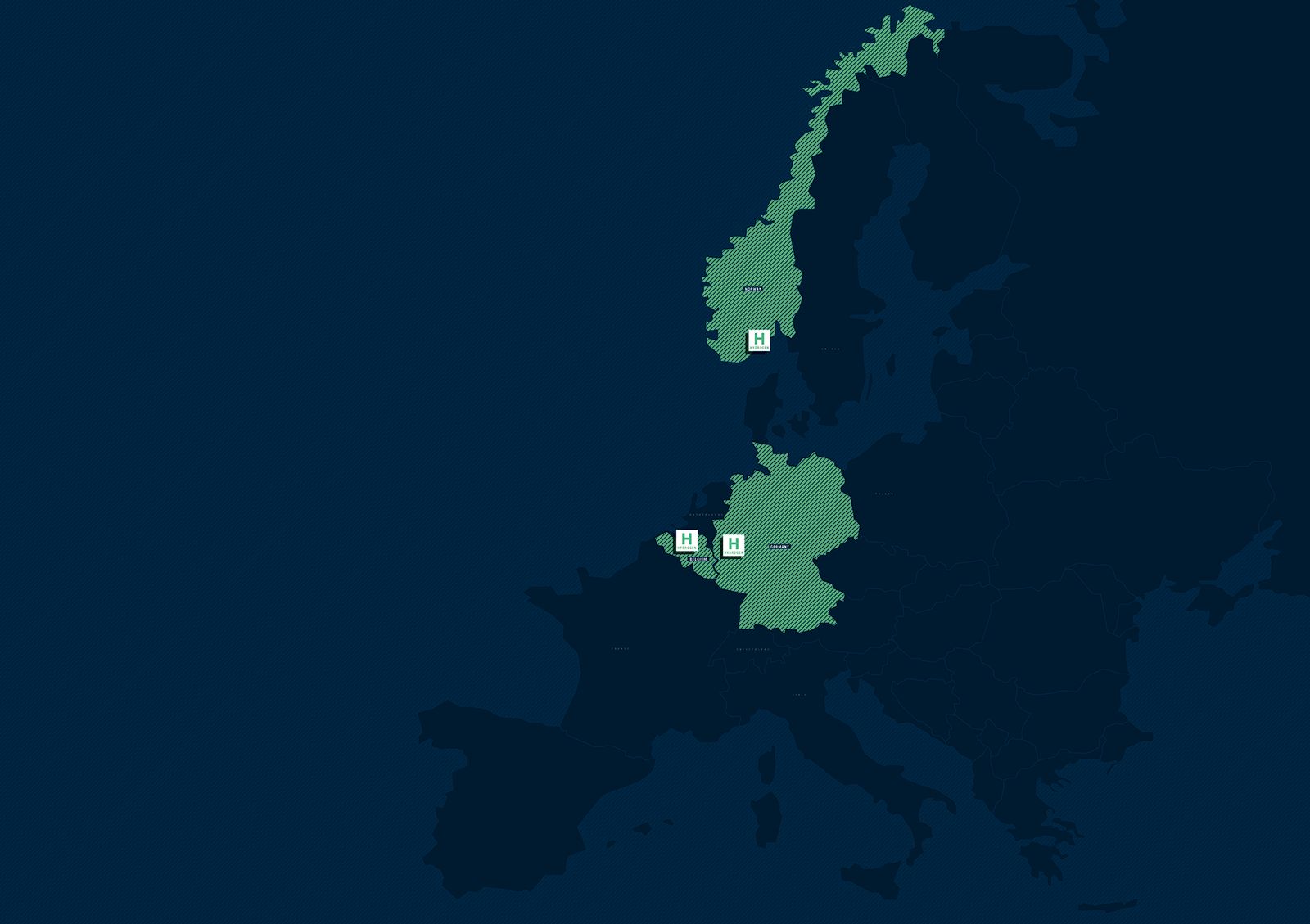
Governments in Norway, Belgium and Germany are all investing in hydrogen projects put forward by INEOS.
“Hydrogen projects are not without risk because they are extremely expensive, but if we didn’t believe in this, we wouldn’t be doing it,” he said.
INEOS was recently awarded €770,000 to carry out a feasibility study to see whether green hydrogen can be integrated at INEOS’ O&P site in Köln, Germany, and converted into green ammonia by INEOS Nitriles.
Producing green ammonia could cut global greenhouse gas emissions by almost 1% every year.
In April this year, the Norwegian government gave INEOS Inovyn €1 million to thoroughly analyse its Project Aquarius plans to build one of Norway’s first hydrogen plants at its chemical manufacturing site in Rafnes.
“We support those who take the lead in technology development,” said Nils Kristian Nakstad at Enova, a state enterprise owned by Norway’s Ministry of Climate and Environment.
Geir Tuft, CEO of INEOS Inovyn, said the Aquarius project was an important part of INEOS' strategy to take a leading role in developing industrial-scale hydrogen manufacturing.
Zero-carbon electricity will be used to produce clean hydrogen through the electrolysis of water.
These government investments follow similar funding for an ambitious project in Belgium to investigate the possibility of mixing captured carbon dioxide waste with sustainably-generated hydrogen to produce methanol, a chemical widely used in everything from medicines, clothing and paints, to car parts and fuel.
If the consortium agrees, a plant, capable of producing 8,000 tonnes of sustainable methanol every year, will be built at INEOS Inovyn's chemical manufacturing complex at Lillo.
The UK government has so far been slower to react, but Wouter said INEOS Inovyn, which has been producing and using low-carbon hydrogen in the UK for over 100 years, was pressing ahead with its plans for its Runcorn site regardless.
It is currently building a compression unit to increase the supply of hydrogen to help fuel the UK’s transport network – and produce hydrogen-powered stationary fuel cells, allowing polluting diesel generators to become a thing of the past.
Funding, though, will be sought for its planned electrolyser.
“We are planning to apply for government funding, but if it is not forthcoming, we will have to look elsewhere,” said Wouter.
What INEOS hopes to establish, through its many hydrogen-based projects around the world, is credibility.
“We are gaining a lot of expertise, a lot of knowledge, a lot of networks and a lot of partners,” he said. “But we need to make something work on the ground before we set off on another big adventure.”
INEOS believes in a future powered by hydrogen. The challenge for its hydrogen team, which recently doubled in size, is convincing governments that a net zero economy by 2050 will be impossible without it.
For INEOS’ ambitions don’t end here.
It is already exploring the possibility of building a large-scale electrolyser ‘in a windy and sunny place’ so it can produce enough cheap green hydrogen – and its derivatives – to be transported to the European market.
INEOS wants to be at the forefront of the energy transition and is prepared to invest to make that happen.