

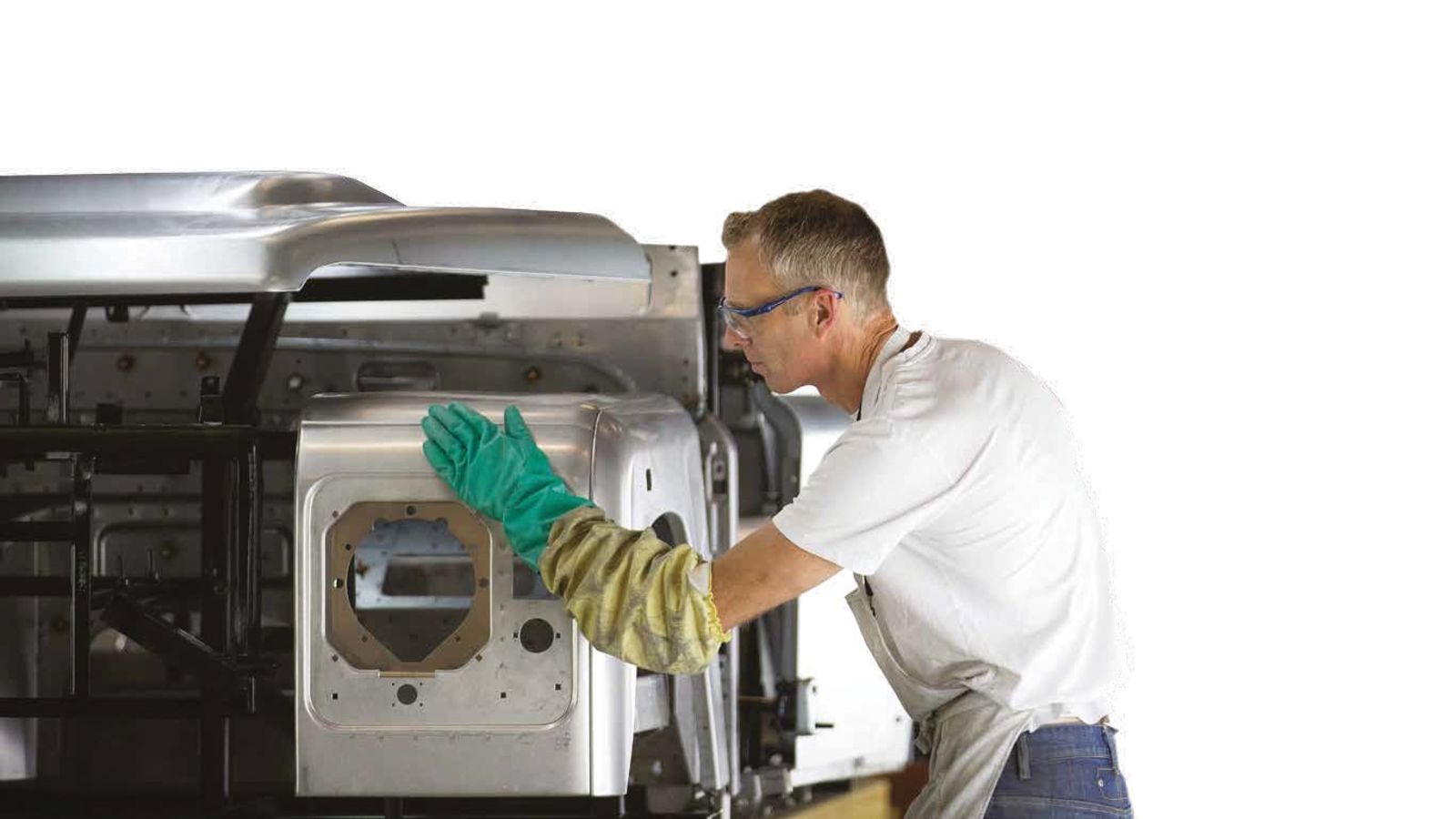
One thing is clear. Countries that lose their manufacturing base risk losing their ability to innovate. Against the background of an economic environment which has seen the erosion and offshoring of traditional industries in the face of global competition, the German model, or some parts of it, warrants careful consideration. Above all, we have to pay attention to other countries’ policies and programmes and learn from them, just as we have in the past.
Charles Wessner, programme director with the Board on Science, Technology, and Economic Policy at the National Research Council
Manufacturing jobs are the foundation of our economy. Manufacturing creates the goods that bring in the income that supports the service economy. We cannot just cut each other’s hair and sell each other hamburgers. The income to pay for those haircuts and burgers has to come from somewhere.
Campaign for America’s Future
The health of the economy is critically dependent on the health of the manufacturing sector. Over the past several hundred years manufacturing has been the key to prosperity. The most powerful nations in the world are those that control the bulk of the global production of manufacturing technology. But it simply isn’t enough to have factories and produce more goods. You have to know how to make the machinery that makes the goods. Without a robust revival in America’s manufacturing sector, we can kiss our status as a great economic power goodbye.
Jon Rynn, author of Manufacturing Green Prosperity: The power to rebuild the American middle class
On a global scale manufacturing matters. Even though it has historically been associated with environmental damage, it now holds out the promise of easing some of the world’s environmental problems. For instance, many goods can now be made using factory processes that involve virtually zero pollution and which allow for recycling once products are discarded. The power of manufacturing to stimulate new thinking has many broader benefits. Many of the innovations that have transformed our lives have evolved from manufacturing. Without the microchip, computer and server, there would be no Internet, Facebook or Google. Manufacturing is vital to Britain’s future prosperity – but it is too often written off.
Peter Marsh, Founder of Made Here Now
For many decades, economists argued that manufacturing played a minor role in the modern economy. They were wrong. Over the past decade, more and more economists have confirmed that manufacturing is essential to innovation, and tightly linked to a nation’s economic health and national security. Manufacturing is the engine that drives US innovation. It transforms laboratory research into new products and production processes that generate profits and make the world a better place. It creates new and vital industries, ranging from computers and wireless to biotechnology and solar power. As engineers and manufacturers develop new technologies, they build the capabilities to extend and innovate in new fields. Those innovations give manufacturers the performance or cost edge they need to compete in a crowded international marketplace.
Professor Thomas Kurfess, former assistant director for advanced manufacturing at The White House
Not only does manufacturing create value in products and services, but it creates good paying jobs. Production facilities also have an outsize impact in creating jobs among suppliers and service industries that support them. If you walk through a modern factory today, you immediately see that manufacturing is much more than putting tops on bottoms – it often employs sophisticated processes with a heavy dose of computer-driven automation. It is more knowledge work than manual labour. And perhaps most importantly, in new areas like advanced materials and biopharmaceuticals, manufacturing is closely linked to R&D and design in the early stages of production, so being able to make products sustains your ability to innovate over the long term. If you give up the former, you’ll impact your ability to do the latter.
Willy Shih, Robert and Jane Cizik Professor of Management Practice, Harvard Business School