

Out of Africa comes hope
New runway is built to help scouts patrol and protect one of the most important wetlands on Earth.
FROM the air, it may get lost in the vast landscape. But from the ground, building a runway in one of the remotest parts of Africa is not only a significant achievement, but also hugely important. For it will mean light aircraft can regularly patrol the Usangu wetlands – the source of the Great Ruaha River and a haven for many species of wildlife.
“This will be an absolute game-changer for the protection of the wetland,” said Brandon Kemp, CEO of Six Rivers Africa. “Usangu is a sensitive area and needs as much help as it can get.”
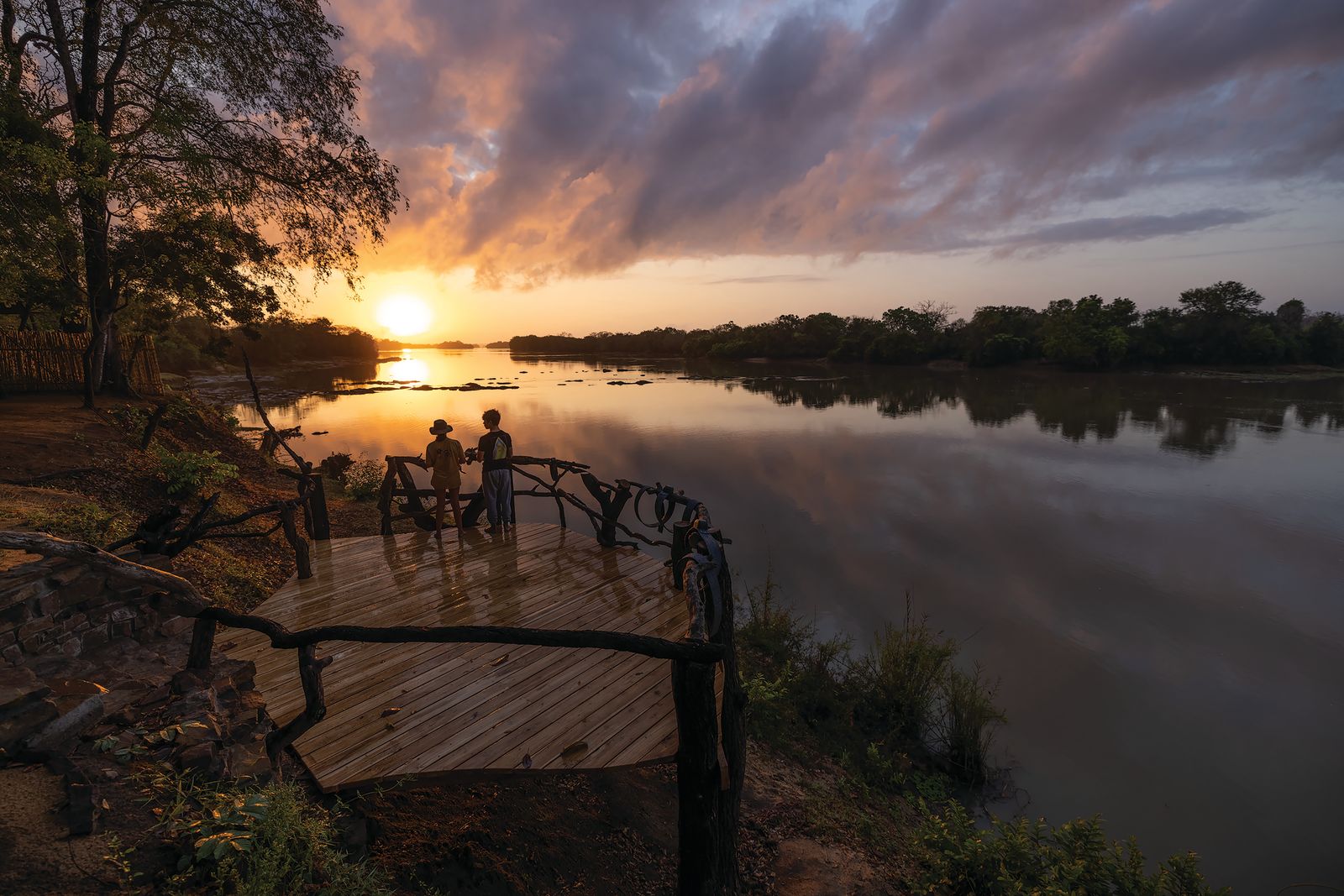
The Ihefu swamp lies at the heart of the wetlands in Usangu, a vast, unspoilt wilderness in southern Tanzania. It is home to elephants, buffalo, lions, leopards, wild dogs and tiger fish – and the only way into the park used to be on foot.
In 2019, a road was carved through the dense miombo woodland; now there’s the airstrip at Ikoga.
At the opening of the new 1.4km runway, Glenn Turner, Chairman of Six Rivers Africa, thanked the Tanzanian government and the people of Tanzania for trusting the INEOS-backed, not-for-profit organisation to invest in projects that will help to protect some of Africa’s great wild places.
“Together we can make them better,” he said.
It took six months to build the new runway and adjoining protection base where locals will be trained to carry out research and anti-poaching patrols. The 16 ‘scouts’ will also live there.
Although it is currently being used by the Tanzanian National Park Authority and the Six Rivers team, it is hoped that one day the runway will help to make it easier for tourists wanting to reach this remote corner of Africa.
The runway was built with funds provided by INEOS Chairman Sir Jim Ratcliffe, who founded Six Rivers Africa amid concerns about the decimation of the African savanna.
He has spent a lot of time in Africa and believes developing sustainable tourism in southern Tanzania will not only increase awareness of the region’s beauty and importance, but also create lasting jobs for local people.
“When a local community benefits from high-quality employment from tourism, poaching flips to protection to preserve those jobs,” he said.
For the past nine years Six Rivers Africa has been working closely with Asilia Africa, one of the country’s leading safari companies.
The latest camp to open was in Usangu, where tourists have helped to carry out research and track the wildlife.
The camp’s other purpose was to help discourage poaching. And it seems to be working.
“Since it opened, instances of illegal poaching have fallen dramatically,” said Glenn. “There are now herds of hundreds of buffalo and sable, as well as scores of elephant with calves, returning to these iconic wetlands.”
But that’s not all.
Prides of lions have also moved into the wetlands, as have leopards and hyenas.
Chris Fallows, a professional wildlife photographer, spent some time at the Usangu Expedition Camp late last year and was amazed at what had been achieved by the team.
“Everyone involved in the project has been astounded that change has taken place so quickly, and the overriding feeling is that the recovery potential is immense,” he said.
Iceland builds on solid foundations
Conservation efforts stepped up to help ease plight of endangered Icelandic salmon
INVESTMENT continues to flow into Iceland to help reverse the dramatic decline in numbers of North Atlantic salmon. Six Rivers Iceland is planning to open more world-class fishing lodges along rivers in North East Iceland to help raise vital funds for its ongoing research and conservation.
“Fishing has been affected in recent years due to the war in Ukraine, recessions in some countries and the fact that the Americans are half afraid since the Sundhnúkur eruption,” said Gísli Ásgeirsson, CEO of Six Rivers Iceland. “But the more fishing licences we can sell, the more income we can generate which all flows back into our research.”
A new top-end fishing lodge has now opened about 2km upstream from the old lodge at Miðfjarðará river, which winds its way though spectacular, unspoilt scenery.
“This is a part of Iceland that is really very remote even by our standards,” said Glenn Turner, Chairman of Six Rivers Iceland.
Further lodges are planned at Hafralónsá and Hofsá. The current Hofsá Lodge was built in the 1970s with the then Prince Charles, now King Charles, one of its earliest, regular guests. The Prince of Wales pool on the Hofsá river remains one of the world’s most iconic fishing spots.
Once built, all the lodges will also be available when the three-month fishing season ends.
“We think they might appeal to those who perhaps want to go kayaking, skiing, whale watching or mountain biking,” said Gísli.
INEOS Chairman Sir Jim Ratcliffe, a keen fly fisherman, founded Six Rivers Iceland in 2019 after he learned the iconic fish was endangered.
He discovered Strengur Fishing Club was doing all it could to protect the species, but it needed financial help to do more.
Since then, salmon ladders have been installed to increase the size of the breeding ground for the fish, which lay their eggs in freshwater, then return to the ocean.
Trees have been planted to enrich the soil around the rivers to make the rivers themselves healthier. Smolts have been tagged so scientists can track and monitor their behaviour. And hundreds of thousands of salmon eggs have been planted into the gravel in rivers further upstream to again increase the size of the breeding ground.
“The speed at which the project has expanded is truly impressive,” said Glenn.
Since 2019, about 10,000 saplings have been planted each year. By 2023, that number had increased to more than 90,000 saplings with many more planned for this year. By 2028, the aim is to plant one million trees every year.
“Right from the start we hit impressive numbers with our tree plantings, but we always wanted to aim higher,” said Glenn. “And this accelerated growth can be attributed to a combination of factors, including thorough planning, clear objectives, and excellent teamwork.”
All the data collected by scientists will help researchers and conservationists understand why the Atlantic salmon are declining and what needs to be done to reverse this decline.
Earlier this year several experts from Iceland, the UK and Norway met at Vopnafjörður close to the rivers to discuss their findings and potential threats to the salmon’s existence.
“It is important for us to engage with the local community to ensure that they are informed on what we do and why,” said Dr Rasmus Lauridsen, chief scientist at Six Rivers Iceland, which once again hosted the event.
He spoke of the potential threat posed by open-pen salmon farms.
“It is hard to say how big a threat open-pen salmon farming is in Iceland, but in Norway it has been established that they have 10% fewer returning adult salmon, purely due to increased sea lice levels caused by the fish farms,” he said.
He warned that escaped sea-pen salmon did not have the right genetic make-up for Icelandic rivers.
“When they escape from their pens during the frequent violent storms, they mix and spawn with wild salmon, which dilutes the locally-adapted genes of wild salmon with the genes of farmed salmon which can significantly reduce the fitness of wild populations,” he said.
“Farmed salmon are bred for growing fast in a farm where there is no need to be cautious about predators.”
The wild Atlantic salmon is an amazingly adaptable fish. It can move from a saltwater environment to freshwater in minutes.
But it is suffering from a combination of overfishing and poaching to warming oceans and rivers.
In the 1980s there were six million wild salmon in the North Atlantic; today there are two million.
The recent rapid increase of non-native pink salmon in the North Atlantic is also a concern to scientists, who fear the Pacific pink salmon could compete more aggressively for food and territory.
But the positive news is that Six Rivers Iceland is now showing a steady halt in the decline of salmon on the rivers it manages.