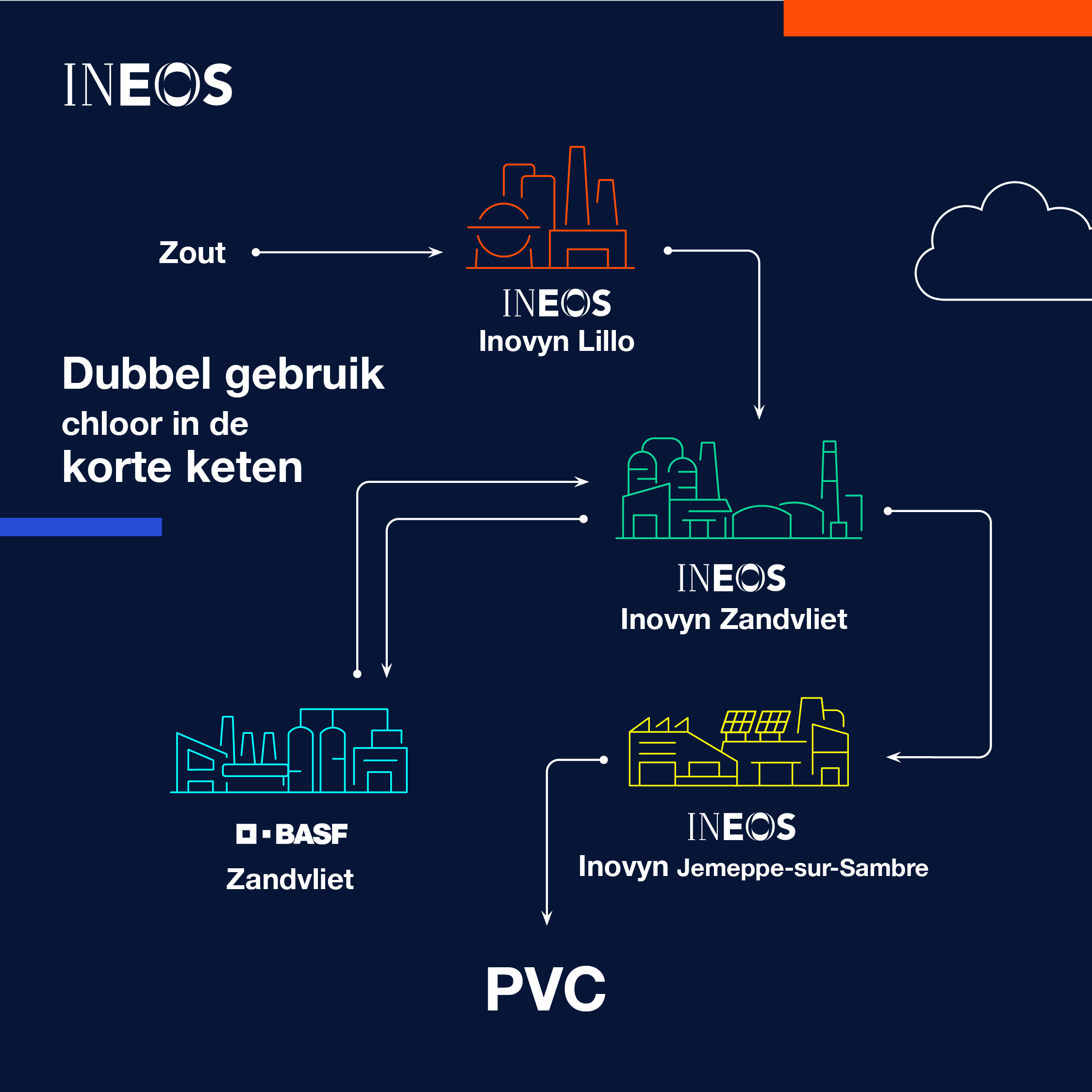
- The chlorine used by INEOS Inovyn in the PVC production process is used not once but twice: by INEOS Inovyn and by BASF.
- A good example of how short chains contribute to a sustainable industry.
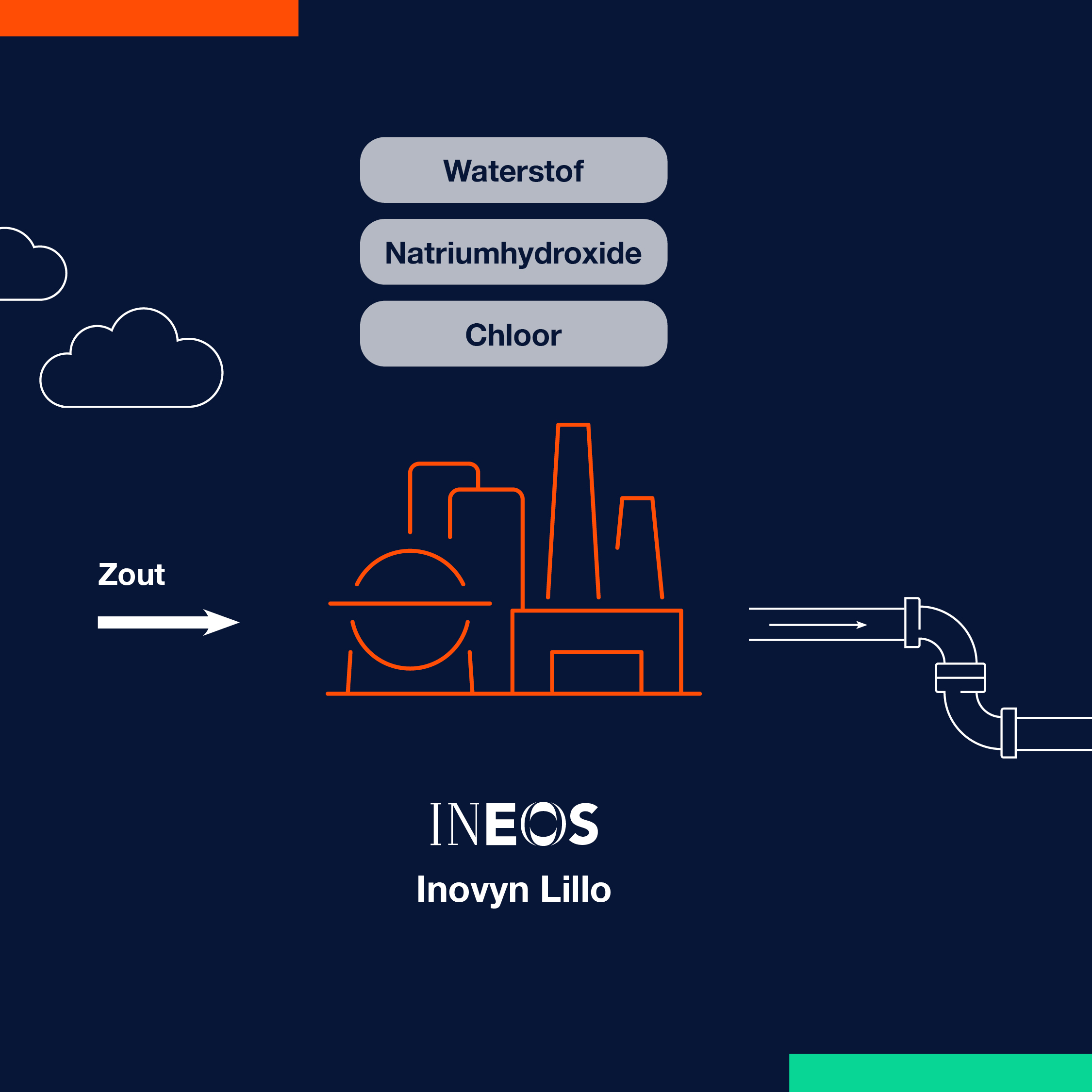
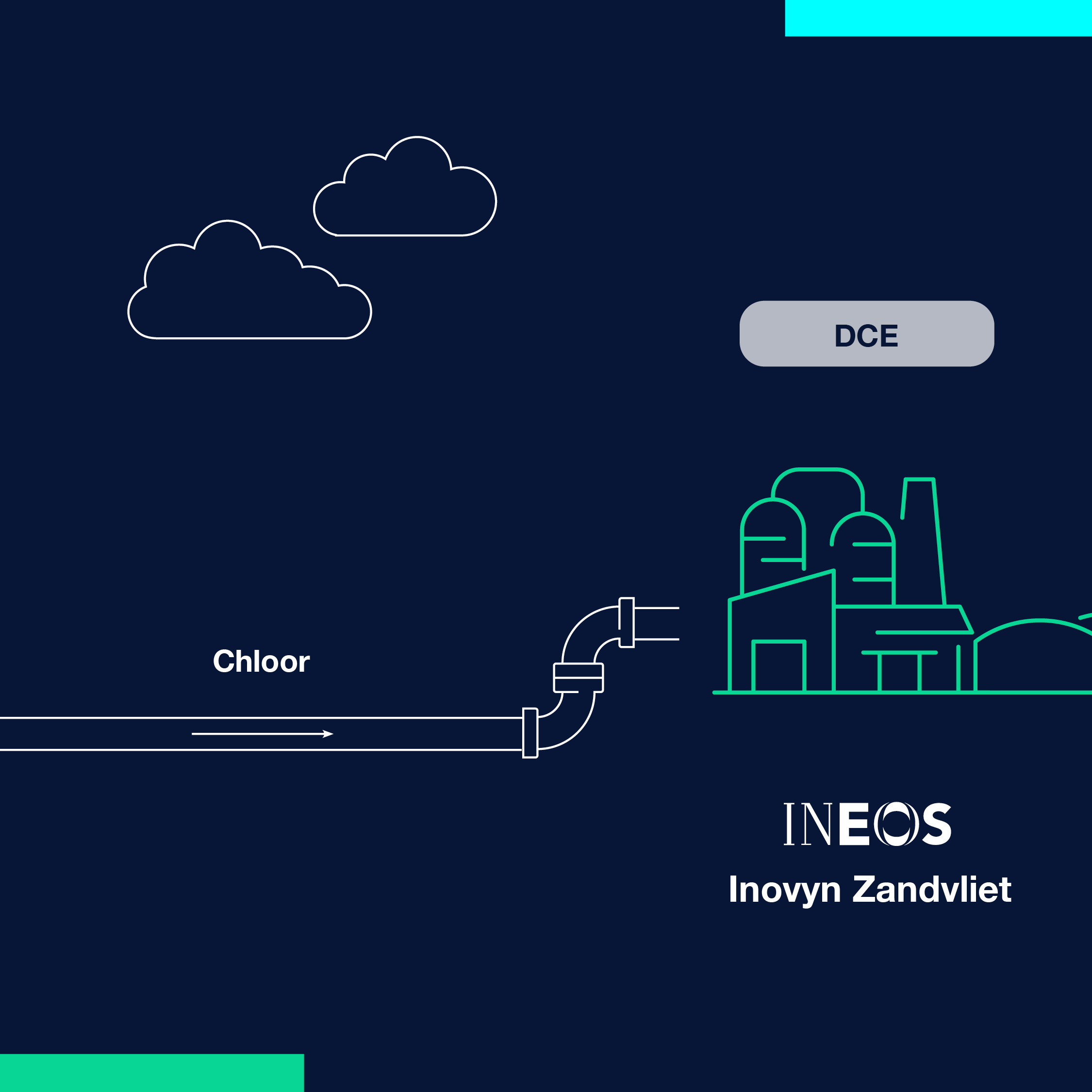
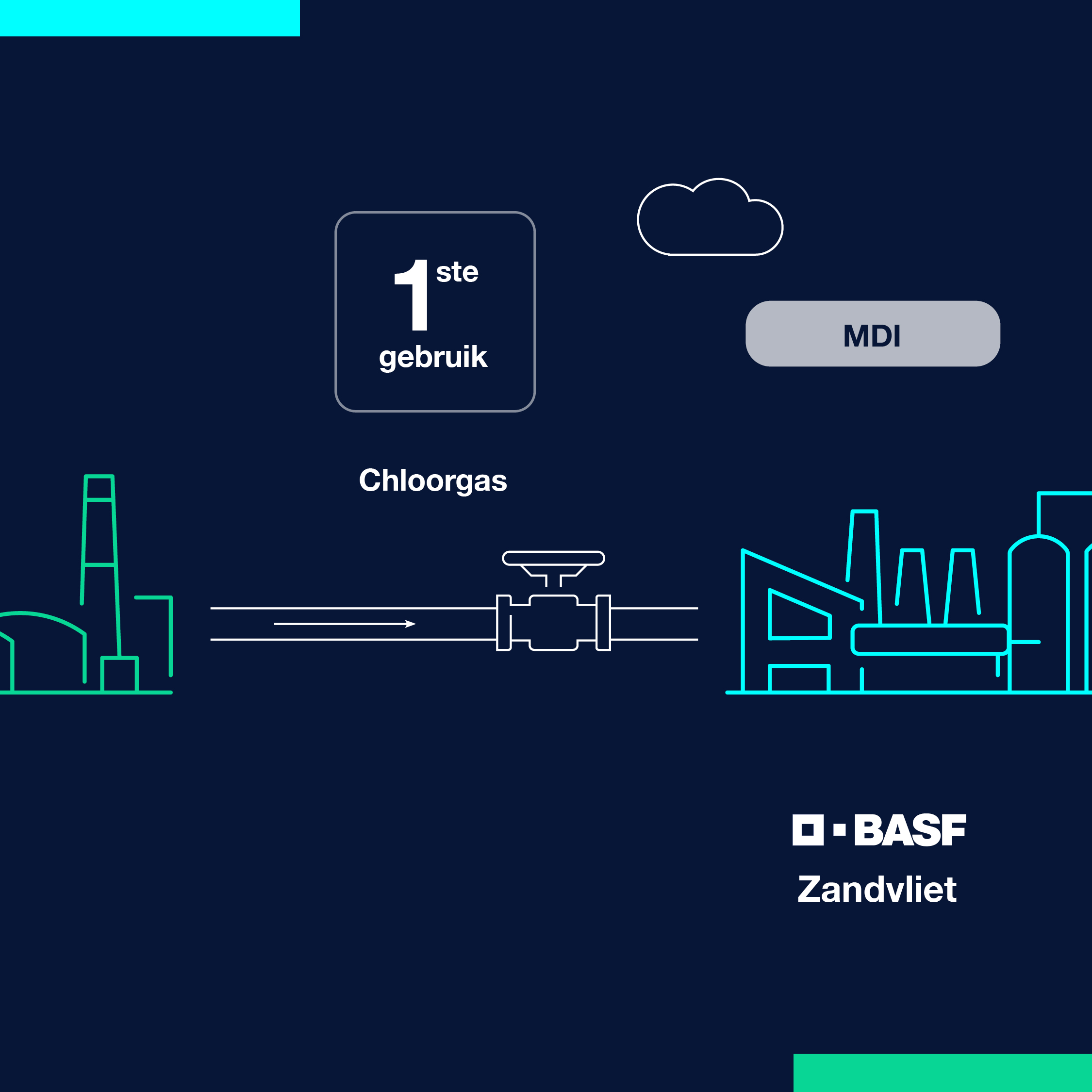
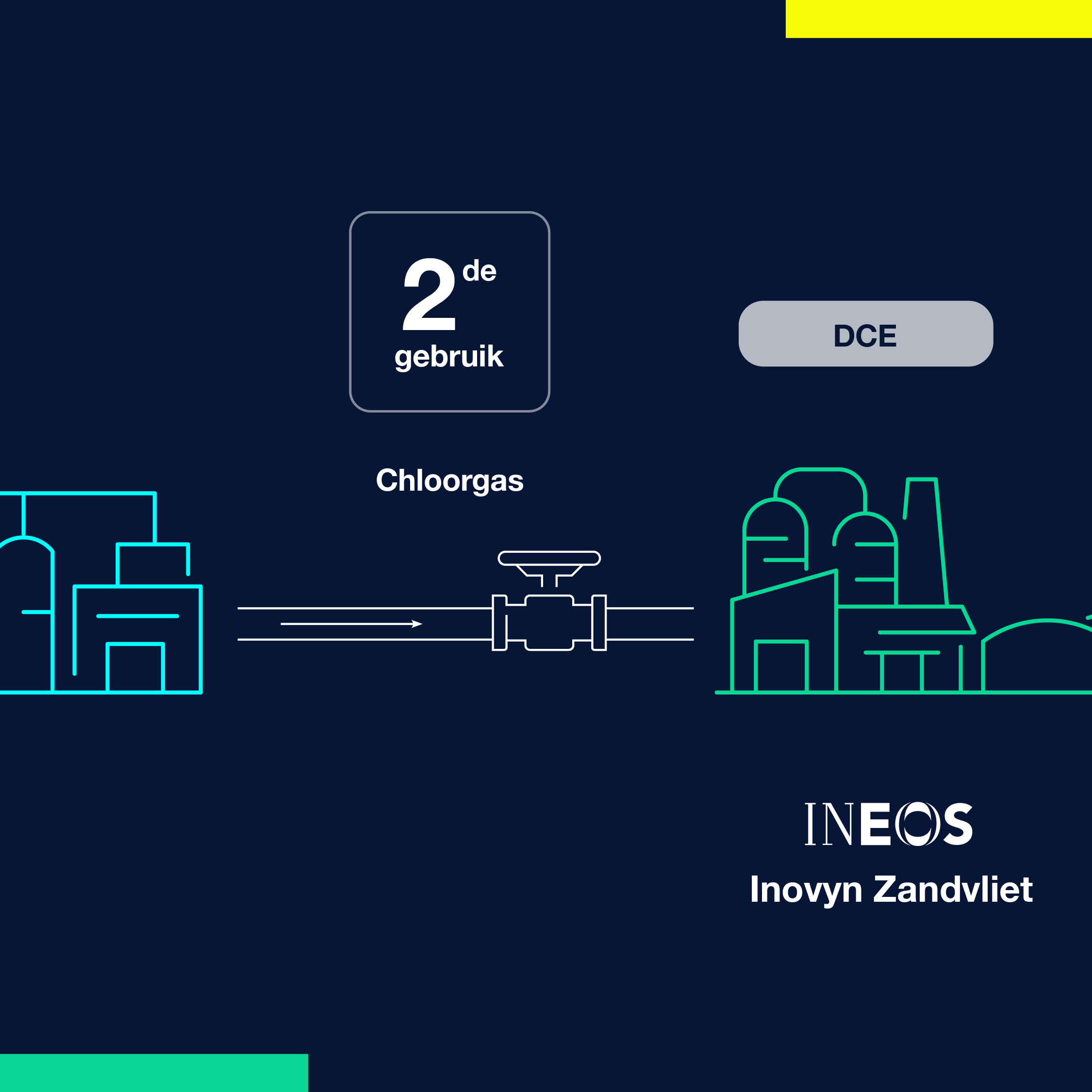
At INEOS Inovyn in Lillo, salt goes through membrane electrolysis. In addition to hydrogen and sodium hydroxide, this also produces chlorine. A pipeline brings chlorine to the other INEOS Inovyn site in Zandvliet – about 4 km away. There, the chlorine is evaporated into chlorine gas and then sent by pipeline to BASF, on the same site. BASF uses the chlorine gas in the production of MDI, an essential ingredient for polyurethane.
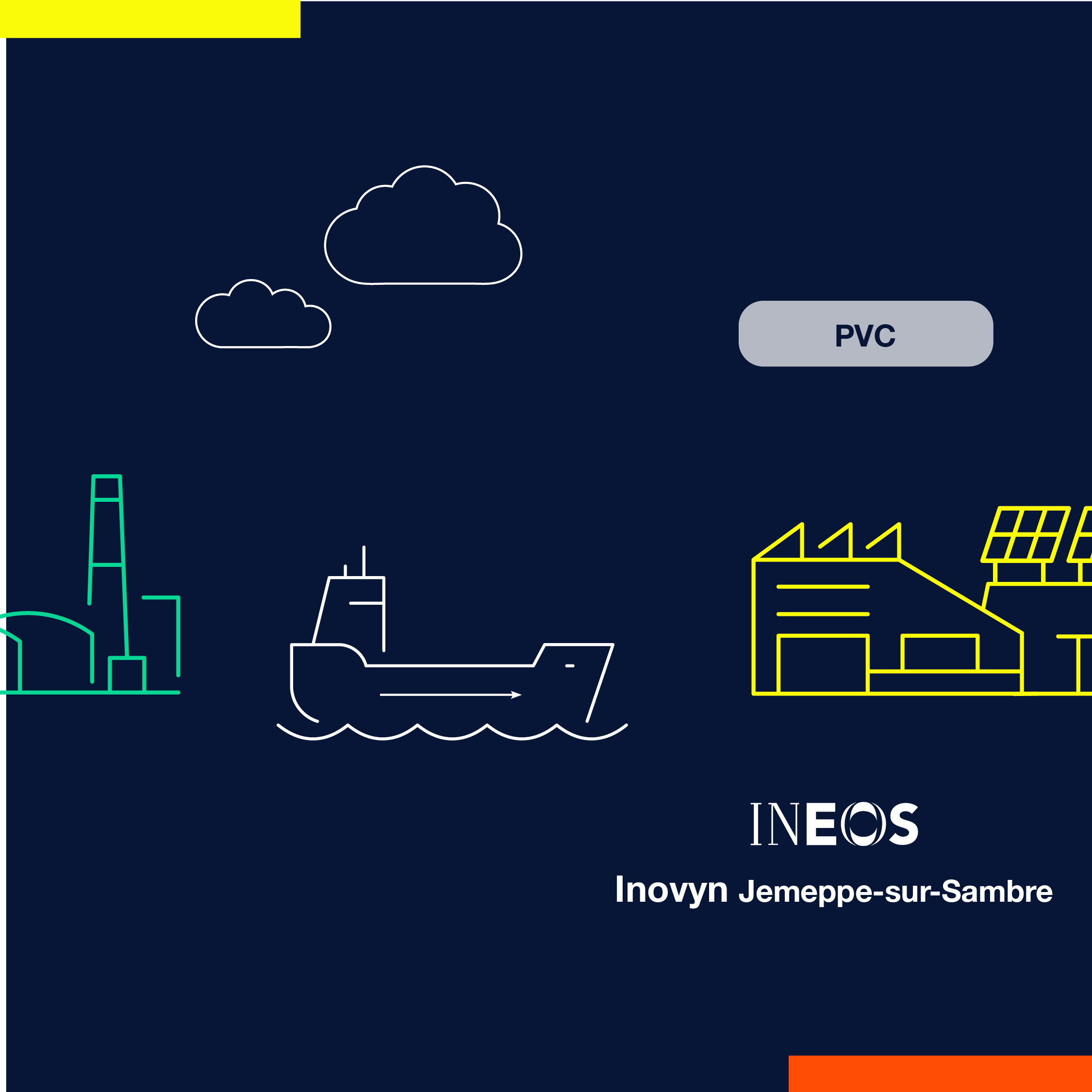
What makes this collaboration special is that the chlorine is not used just once. After the initial processing at BASF, 85% of the chlorine gas is sent back to INEOS Inovyn in Zandvliet. There, it then serves as a raw material for the production of dichloroethane (DCE), which in turn is transported by barge to INEOS Inovyn in Jemeppe for the production of PVC.
By using the chlorine twice, the need for new raw materials is reduced and the ecological footprint is reduced. A good example of industrial symbiosis, circularity and the short chain. After all, it concerns 3 companies that are close to each other and are connected to each other by pipelines. The formation of clusters in the chemical industry ensures that companies can be each other's suppliers and customers at the same time.
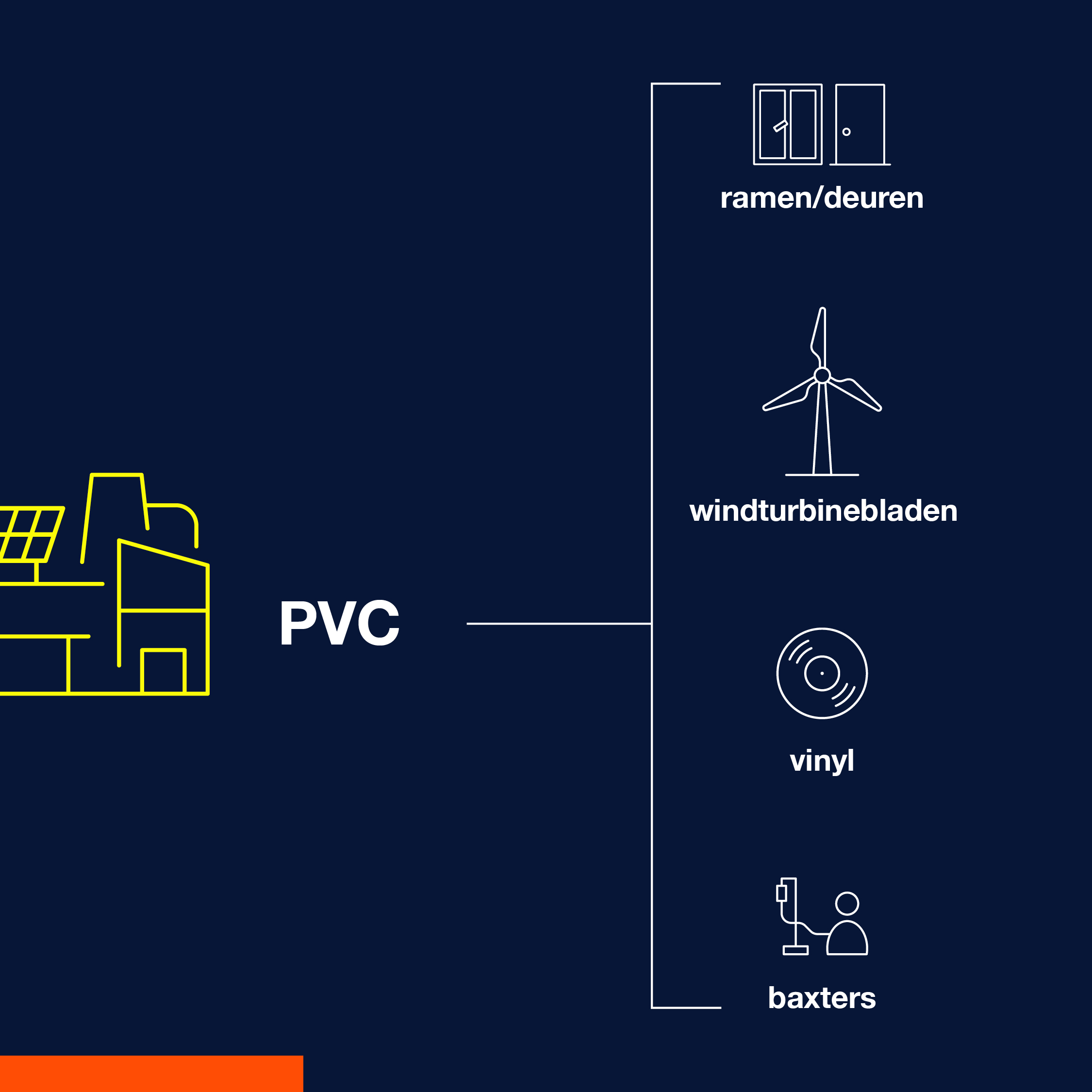
The transport to the INEOS Inovyn site in Jemeppe is then done by water. PVC is produced there, which you can find in window and door profiles, but also in wind turbine blades, vinyl sheets and medical applications such as blood bags and baxters.