
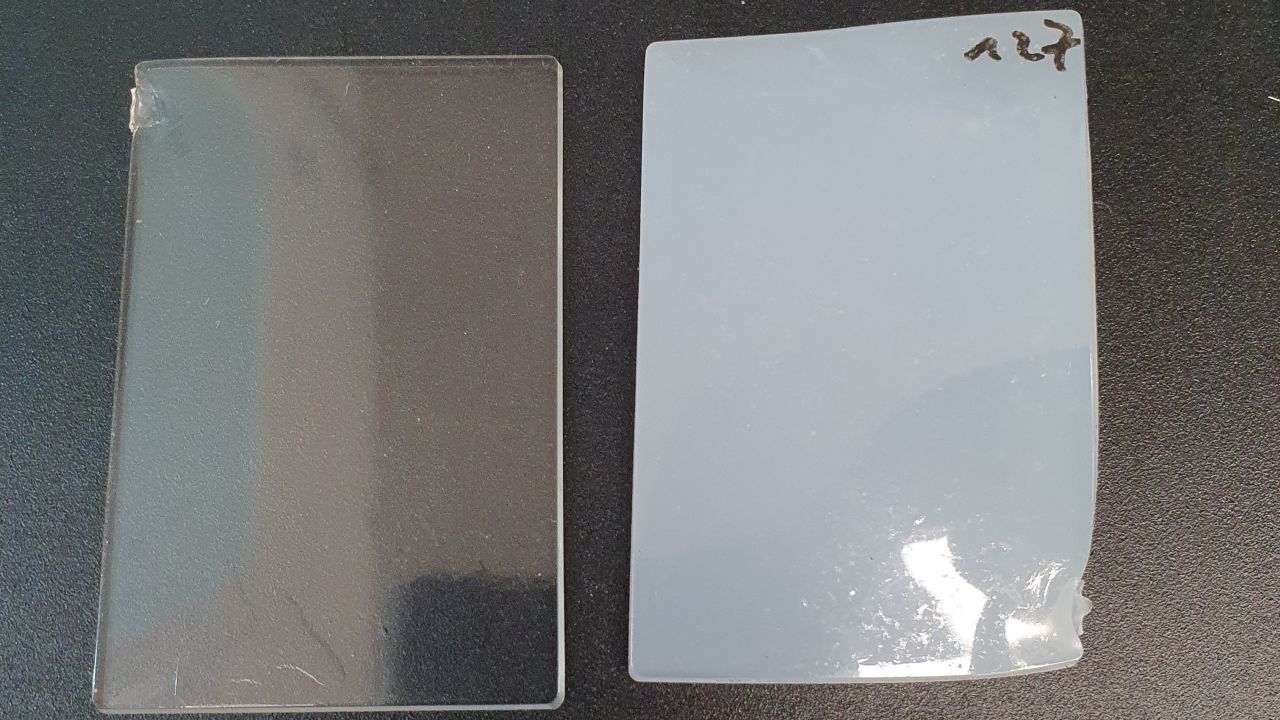
- Why does a transparent plastic made of SBC (styrene-butadiene block copolymer) lose its clarity after storage in warm salt water?
- That was the question with which one of our customers knocked on the door: INEOS Styrolution.
Colleagues Ben, Stephanie and Dirk at the research center in Zandvliet immediately got to work: they stored the material in the same conditions in warm, salt water and went looking for an explanation. The answer resulted in a publication in Macromolecules – one of the leading journals in polymer science – and a concrete product improvement. The research underlines how local expertise contributes to innovation and better performance of plastics in demanding applications.
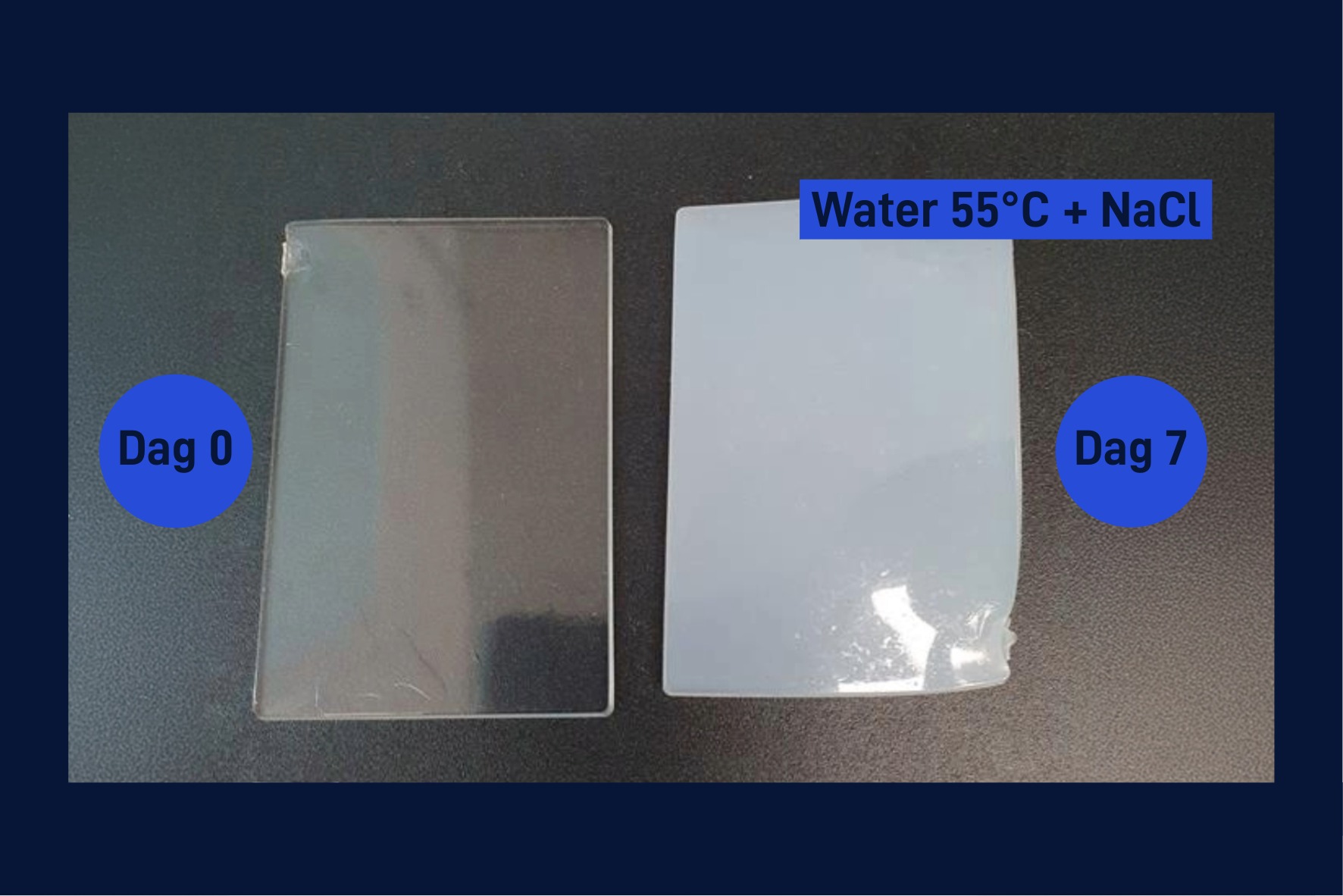
What exactly happens when plastic becomes cloudy?
What at first glance seems like an aesthetic problem tells a lot about what is happening inside the material. Our R&D colleagues discovered that water forms microscopic droplets in certain polymers. These droplets scatter light, making the material look cloudy. For example, in the photo you can see the same material in its original condition and after 7 days in warm salt water. By refining the chemical structure of SBC materials, we were able to greatly reduce that 'haze'. The result: transparent plastics that stay clear for longer, even in damp or wet conditions.
Why is this important?
The insights from this research will help us improve not only SBC materials, but also other plastics used in medical applications, transparent packaging or dishwasher-safe consumer products. Machine learning also allowed us to predict long-term performance based on early test results, significantly reducing development time and allowing colleagues to quickly present concrete recommendations.
What are SBC plastics?
SBC stands for styrene-butadiene block copolymer: a plastic that combines hardness and flexibility. SBC materials are transparent, impact-resistant and easy to process. They are used in a variety of applications: medical products, for example, but also things that we all have at home such as cosmetic packaging or a transparent carafe to put drinking water on the table.