

Conservation
Six Rivers Iceland and Six Rivers Africa
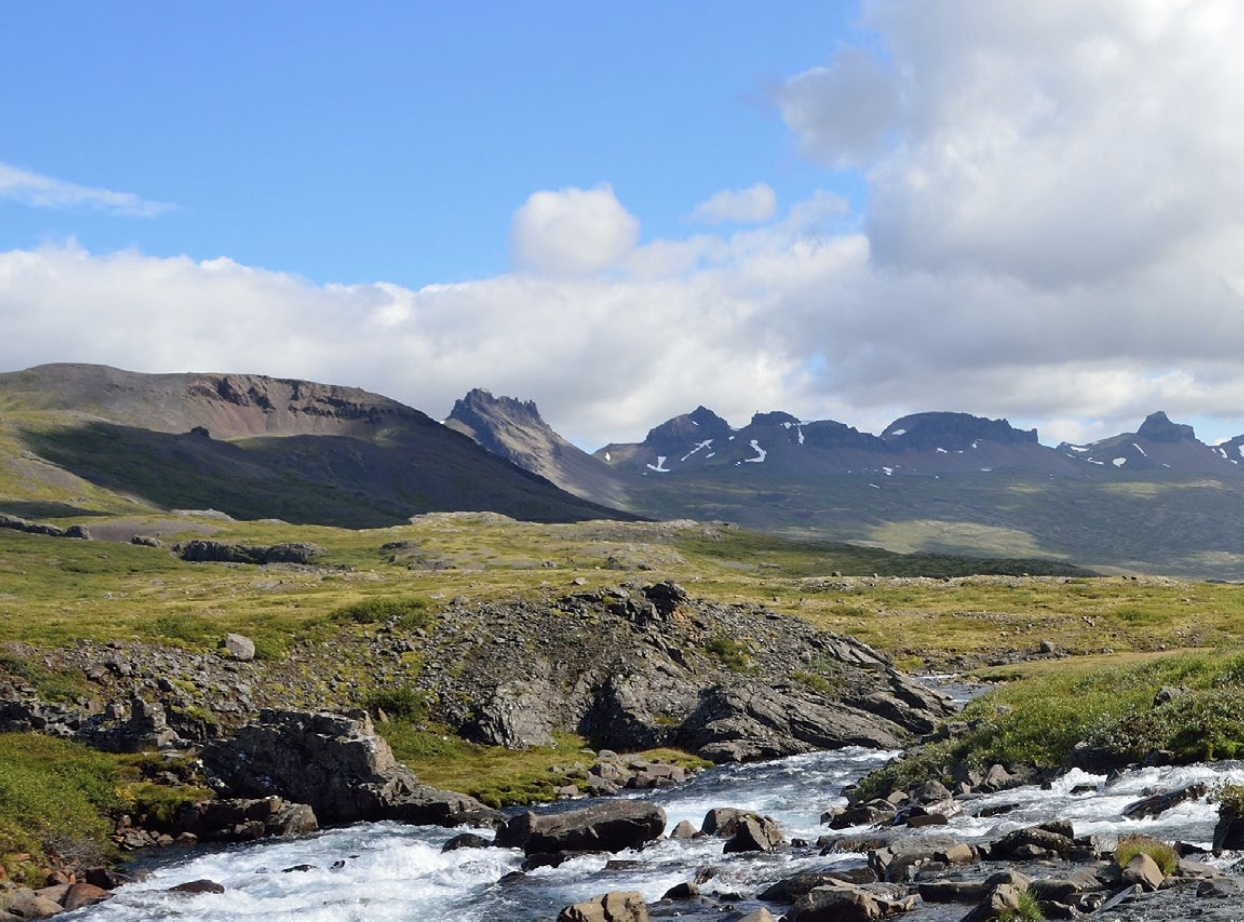
Six Rivers is an international conservation organisation working in two geographically distinct but philosophically aligned regions: northeast Iceland (the Iceland Project) and southern Tanzania (the Africa Project).
In both places, the Foundation seeks to protect fragile freshwater river ecosystems and savannah/wetland ecosystems through protection of protected areas and long‑term science, practical intervention, and close collaboration with local government and communities.
While the species and landscapes differ dramatically, the underlying challenge is the same: reversing ecological decline while creating models of conservation that are socially and economically sustainable.
The Iceland project is centred on one of the world’s most iconic and threatened fish species: the Atlantic salmon (Salmo salar). Across the North Atlantic, wild salmon populations have collapsed over the last five decades. Scientific data show that returning adult salmon numbers have fallen from approximately five million in the early 1970s to fewer than two million today, with many rivers now functionally extinct. In parts of continental Europe and North America, Atlantic salmon have already disappeared entirely from their historic ranges.
The drivers of this decline are complex and cumulative. Habitat fragmentation from dams and culverts blocks access to spawning grounds. Poor river health reduces food availability for juvenile salmon. At sea, salmon face predation, changing prey systems, and continued pressure from commercial by‑catch and illegal or poorly regulated fisheries. Aquaculture has added further risk through parasite transmission, disease, and genetic dilution when farmed salmon escape and interbreed with wild populations.
Against this global backdrop, Iceland occupies a uniquely important position.
Thanks to cold, nutrient‑rich rivers, strong fisheries governance, and a long tradition of rod‑only fishing, Iceland still supports some of the healthiest remaining wild Atlantic salmon populations. However, even here the trend is downward, and Icelandic scientists warn that the country has only “so far largely escaped” the worst of the global collapse, not avoided it altogether.
Six Rivers Conservation
This is the context in which the Six Rivers Iceland Project was established in 2019.
The project focuses on a network of remote rivers in northeast Iceland – including the Hofsá, Selá, Miðfjarðará, and Hafralónsá – where intact catchments offer an opportunity for meaningful recovery if managed holistically.
Six Rivers Iceland operates as a not‑for‑profit conservation programme, reinvesting all proceeds from carefully managed catch‑and‑release angling into habitat restoration and research. Its work spans the entire salmon life cycle, from egg to returning adult.
Reforestation and riverbank restoration to improve insect productivity and juvenile feeding conditions. Egg planting and fry support to boost early survival rates. Installation of fish ladders to reopen historic spawning habitats blocked by natural and artificial barriers. Predation and stress reduction through managed angling pressure and strict release protocols. Alongside these measures, Six Rivers is investing heavily in long‑term scientific research. In partnership with Iceland’s Marine and Freshwater
Research Institute and Imperial College London, the project is tagging parr and smolts, mapping food availability, estimating river carrying capacity, and tracking survival rates from freshwater to sea and back again. This level of integrated river‑to‑ocean understanding is rare in salmon conservation and aims to generate lessons that can be applied well beyond Iceland.
The importance of the Six Rivers Iceland project lies not only in protecting local rivers, but in safeguarding one of the last natural laboratories for wild Atlantic salmon. As salmon vanish elsewhere, Iceland offers a crucial reference point for what healthy systems still look like – and for how recovery might be achieved elsewhere if political and ecological conditions allow. In this sense, Six Rivers Iceland is not just resisting decline; it is actively shaping the future knowledge base of Atlantic salmon conservation.
Africa Project Case Study
Operating in the wetlands and savannah ecosystems of southern Tanzania. These landscapes are among East Africa’s most biodiverse regions, supporting key wildlife populations such as elephants, lions, wild dogs, buffalo, migratory birds, as well as extensive seasonal floodplains that play a critical role in regulating water flows and ecosystem health.
Read the case study